Double treble crochet is one of the tallest basic crochet stitches. It grows your work quickly, makes an open, drapey fabric and is the stitch behind many lacy shawls, shell patterns and flower petals. This tutorial shows you how to make a UK double treble crochet (dtr) in six easy steps, how to handle the turning chain and how to keep your stitches neat.
Quick answer: To make a double treble crochet (UK dtr, US treble): wrap the yarn round the hook twice, insert the hook, yarn round and pull through (4 loops on the hook), then work "yarn round, pull through 2" three times. It is one of the tallest basic stitches, and rows start with 4 ch, which usually counts as the first stitch.
We also look at working double trebles in rounds, left-handed tips, how the stitch compares with its shorter cousins, the projects that use it and the mistakes beginners make most often.
Double treble crochet in UK and US terms
- UK double treble (dtr) = US treble crochet (tr)
- UK treble (tr) = US double crochet (dc)
- UK triple treble (ttr) = US double treble (dtr)
This is the stitch where mix-ups happen most, because “treble” means a different height in each system. If a US pattern says “treble”, work the stitch in this tutorial. See our UK vs US crochet terms chart for the full list.
If you are not sure which system a pattern uses, look for “sc” (single crochet). It only appears in US patterns, so if you spot it, every “tr” in that pattern means a UK double treble.
When to use double treble crochet
Because each stitch is about four chains tall, double trebles are best when you want height, drape or holes in your fabric. They are less suited to items that need to be dense and warm, such as a winter hat or a stuffed toy.
- Height: one row of double treble crochet is roughly the height of four rows of double crochet.
- Drape: the long stems make a soft, flowing fabric for shawls and wraps.
- Shape: mixing dtr with shorter stitches in one row creates curves, such as the rounded top of a petal.
- Lace: tall stitches with chain spaces between them open up the fabric quickly.
Before you start
A double treble is simply a treble crochet with one extra wrap. If you are comfortable with trebles, you already know almost everything you need. You will need:
- A smooth DK yarn in a light colour.
- A 4mm (UK 8 / US G-6) crochet hook.
A hook with a smooth, even shaft helps the extra wraps slide off cleanly. Our crochet hooks guide explains the different shapes and sizes.
How to make a double treble crochet (UK) in 6 easy steps
Make a foundation chain of 19 ch to practise.
- Yarn round hook twice. Wrap the yarn over the hook two times, from back to front. You have 3 loops on the hook.
- Insert the hook. On the first row, insert into the 5th chain from the hook. On later rows, insert under both top loops of the next stitch.
- Pull up a loop. Yarn round hook and pull through the stitch. You have 4 loops on the hook. Lift this loop up a little so the stitch is not squashed.
- Yarn round, pull through 2. You have 3 loops left.
- Yarn round, pull through 2. You have 2 loops left.
- Yarn round, pull through 2. One double treble is done, with 1 loop left on the hook.
The rhythm is: wrap twice, insert, pull up a loop, then three pairs of “yarn round, pull through 2”. Saying “two, two, two” in your head as you go helps a lot at first.
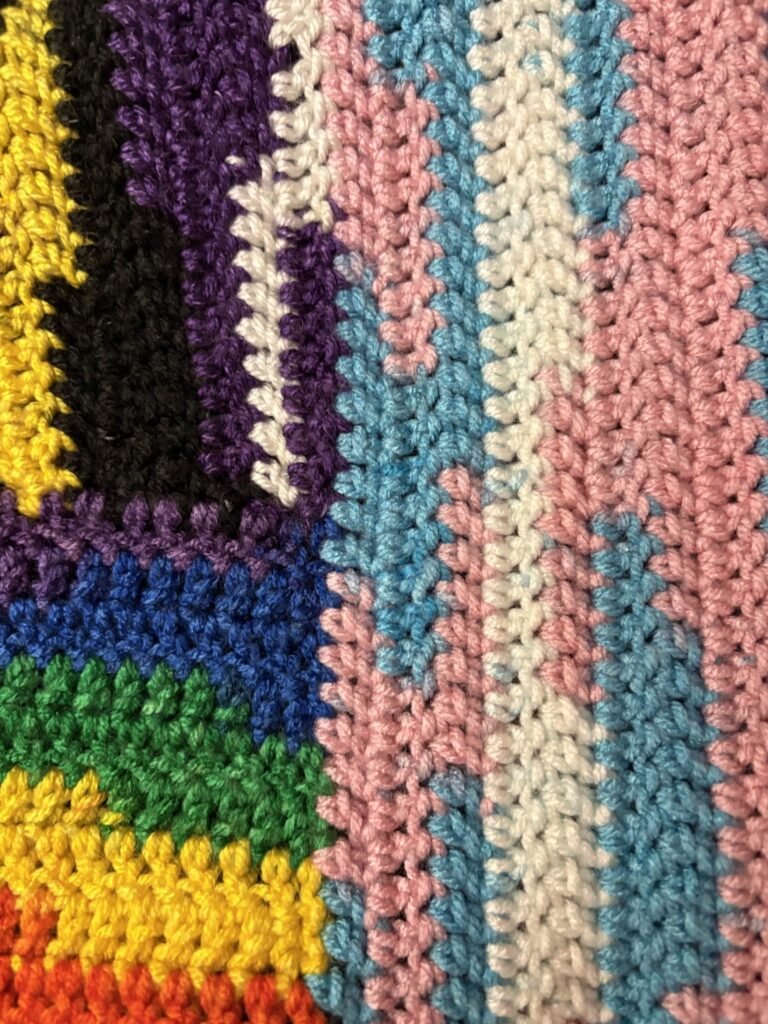
Practice swatch
Row 1: 1 dtr in 5th ch from hook (the 4 skipped chains count as the first dtr), 1 dtr in each ch to the end. Turn. (16 dtr)
Row 2: 4 ch (counts as 1 dtr), skip the first st, 1 dtr in each st across, working the last dtr into the top of the 4 ch from the row below. Turn. (16 dtr)
Repeat Row 2 a few times. Count your stitches at the end of each row: if you have 16 every time, your edges will stay straight.
The turning chain
A double treble is about four chains tall, so each row starts with 4 ch. In most UK patterns this counts as the first stitch, which means you skip the first stitch of the row and finish by working into the top of the turning chain.
Tall turning chains can leave a gap at the edge. If yours look loose, try making only 3 ch and working them a little tighter, or follow a pattern that uses “3 ch (does not count as a st)” and then a dtr into the first stitch.
Double treble crochet in rounds vs rows
In rows, you turn at the end of every row, so the front and back of the stitches alternate. In rounds you usually do not turn, so the same side faces you all the time and the fabric looks a little more even.
Starting and joining a round
Begin each round with 4 ch, which usually counts as the first dtr. Work the rest of the round, then join with a slip stitch into the top of the 4 ch. Small motifs often begin in a crochet magic ring so the centre closes neatly.
Why rounds of dtr need care
Because the stitches are so tall, a round of double treble crochet needs many more stitches, or chain spaces between them, to lie flat. That is why you rarely see a solid flat circle made only in dtr. Patterns usually mix them with chains or shorter stitches.
Moving to the next round
If the next round needs to start in a chain space rather than at the join, patterns often tell you to slip stitch along to the right spot first. Follow these instructions closely, as they keep each round lined up.
Left-handed double treble crochet tips
Left-handed crocheters work double treble crochet in exactly the same way. Hold the hook in your left hand and the yarn in your right, then follow the same six steps.
- Rows go left to right, and rounds go clockwise.
- Hold the wraps with your right index finger on top of the hook as you insert it.
- Charts are mirrored, so read each row starting from the left.
- Patterns do not change. Stitch counts and abbreviations are identical.
Lacy and symmetrical designs look the same whichever hand you use. Only clearly one-sided designs, such as lettering, will come out mirrored.
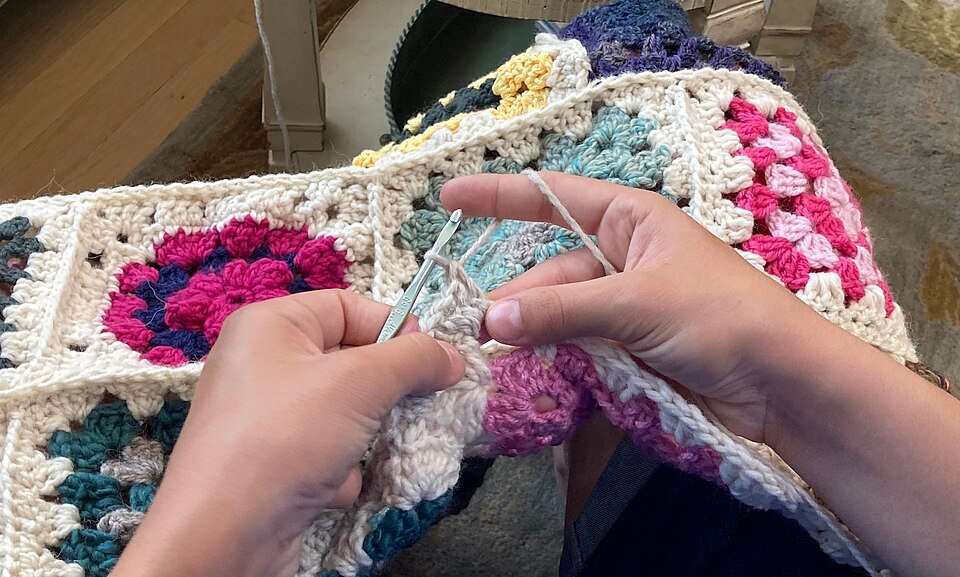
How double treble crochet compares with other stitches
| UK stitch | US name | Height | Wraps first | Pull through 2 | Turning chain |
|---|---|---|---|---|---|
| Half treble (htr) | Half double (hdc) | 2 ch | 1 | None (pull through all 3) | 2 ch |
| Treble (tr) | Double (dc) | 3 ch | 1 | 2 times | 3 ch |
| Double treble (dtr) | Treble (tr) | 4 ch | 2 | 3 times | 4 ch |
| Triple treble (ttr) | Double treble (dtr) | 5 ch | 3 | 4 times | 5 ch |
The pattern is easy to remember: each extra wrap at the start adds one more “pull through 2” at the end and about one chain of height. Compared with the soft, dense half treble crochet, double treble crochet is much more open and grows about twice as fast.
Where double trebles are used
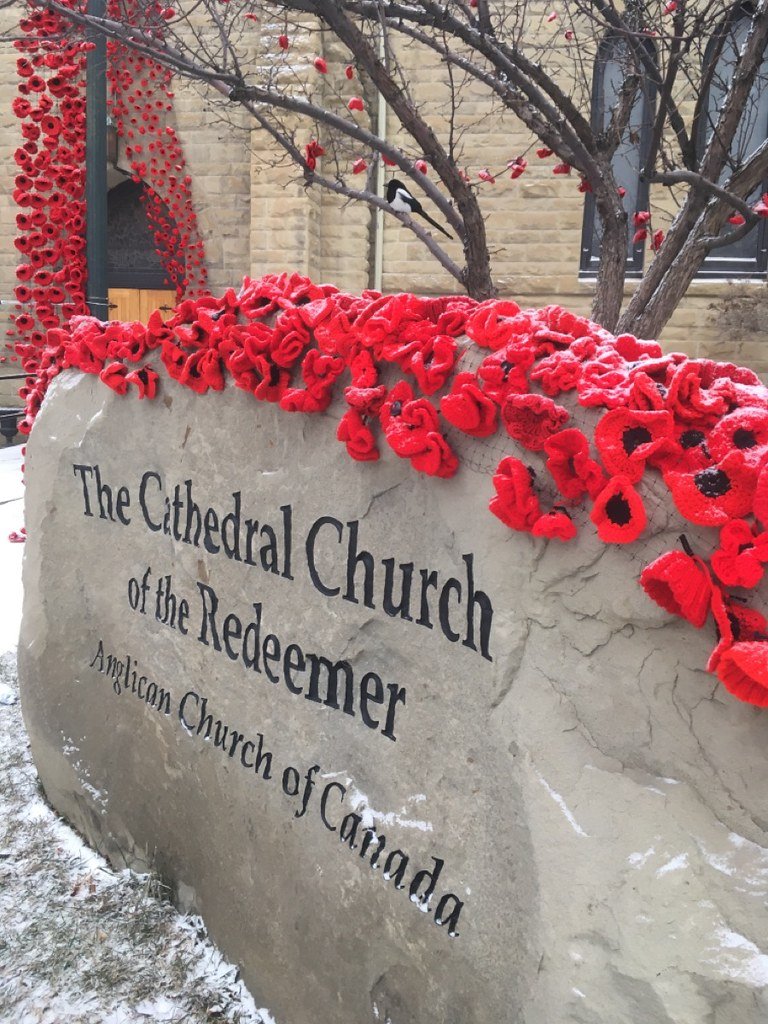
- Flower petals: dtr stitches make the tallest middle part of a petal. Our crochet poppy pattern uses them for its four rounded petals.
- Lace and shells: groups of dtr worked into one space make big fans and shells for shawls and wraps.
- Clusters and bobbles: several part-made dtr closed together make a bold, raised texture.
- Quick projects: a scarf worked entirely in dtr grows very fast and drapes well.
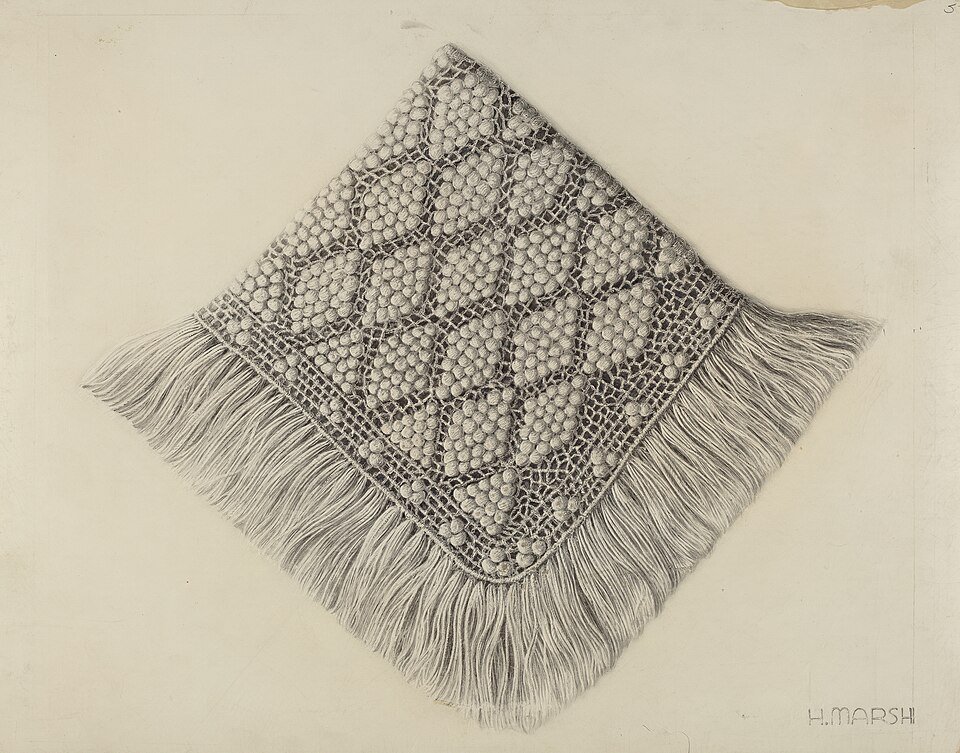
- Doilies and lace motifs: traditional lace often combines tall stitches with chain spaces.
- Mesh fabrics: a row of dtr separated by chains makes a light, open mesh for market bags or summer wraps.
Crochet has a long history of lace work, and you can read more about how the craft developed on the Wikipedia page on crochet.
Reading double treble crochet in a pattern
- dtr: one double treble in the next stitch.
- 2 dtr in next st: an increase.
- dtr2tog: a decrease. Wrap twice, insert into the next stitch, pull up a loop, then (yarn round, pull through 2) twice, leaving 2 loops on the hook. Repeat in the following stitch so you have 3 loops. Yarn round and pull through all 3.
- 5 dtr in next sp: a shell or fan worked into a chain space.
- dtr cluster: several dtr worked to the last step and closed together at the top.
US patterns write these with “tr”, for example tr2tog. The movements are exactly the same.
Common double treble crochet problems and fixes
My stitches are uneven heights
Keep the two wraps at the start the same size, and lift the loop in step 3 to a consistent height. Practising a few rows usually sorts this out.
The bottom of my work is pulling in
Your foundation chain is tighter than your stitches. Make the chain with a hook one size larger, then switch back.
The wraps slip off the hook
Hold the wraps in place with your index finger on top of the hook while you insert it, and keep the hook pointing slightly down.
My piece is getting wider
Check you are skipping the first stitch when the turning chain counts as a stitch. Working into it as well adds a stitch every row.
My stitches look like trebles
You have probably wrapped only once at the start. Count the loops after step 1: there should be 3 on the hook before you insert it.
The stems look loose and loopy
Long stitches show uneven tension more clearly. Keep a light, steady tension on the working yarn and pull each “pull through 2” snug, but not tight.
Tension tips for neat double treble crochet
Tall stitches show every wobble in your tension, so a few small habits make a big difference.
- Make even wraps. Both wraps at the start should sit loosely on the shaft of the hook, the same size as each other.
- Lift the first loop. In step 3, pull the loop up to roughly the height of two chains before you start working off the loops.
- Work off loops steadily. Each “pull through 2” should feel the same. Rushing the last one often makes the top of the stitch tight.
- Relax your hands. A gentle grip on the hook and the yarn keeps the stems straight and even.
With steady tension, double treble crochet gives a beautifully even fabric with long, straight stems.
A simple double treble crochet practice plan
Double trebles feel awkward for everyone at first. Short, regular practice is the quickest way past that stage.
- Work the practice swatch above until you have six rows of 16 stitches with straight edges.
- Try one row of 1 dtr, 1 ch, skipping one stitch between each dtr, to see how quickly a mesh forms.
- Work a few shells of 5 dtr into one stitch, skipping stitches either side, to see a fan take shape.
- Finally, try a small flower or petal pattern that mixes dtr with shorter stitches.
Once these feel comfortable, you are ready for shawls, lace and our crochet poppy. Simple striped projects like the cosy granny stripe blanket are also good for building rhythm with taller stitches.
Next step: the triple treble
Once you are confident with double treble crochet, try a triple treble (ttr): wrap three times before inserting the hook, then work four pairs of “yarn round, pull through 2”. Start the first row in the 6th chain from the hook and use 5 ch for turning.
Quick reference
- Abbreviation: dtr (UK) / tr (US)
- Height: about 4 chains
- Turning chain: 4 ch, usually counts as the first stitch
- First row: start in the 5th ch from the hook
- Chart symbol: a “T” with two short diagonal lines across its stem
Frequently asked questions about double treble crochet
What is a double treble in US crochet terms?
A UK double treble (dtr) is the same stitch as a US treble crochet (tr). It is about four chains tall.
How many chains do I skip for a double treble?
On the first row, work the first double treble into the 5th chain from the hook. The 4 skipped chains count as the first stitch.
What is the turning chain for double treble crochet?
Use 4 chains. In most UK patterns this counts as the first double treble, so skip the first stitch and work the last stitch into the top of the turning chain.
What is the difference between a treble and a double treble?
A treble starts with one wrap and finishes with two pairs of pull through 2. A double treble starts with two wraps and finishes with three pairs, so it is taller.
Can I work double treble crochet in the round?
Yes. Start with 4 ch (usually counts as the first dtr) and join each round with a slip stitch to the top of the 4 ch. Rounds of dtr usually include chains or shorter stitches so they lie flat.