Crochet stocking fillers are small, quick and personal, which makes them one of the nicest things you can make in the run-up to Christmas. A tiny amigurumi, a bright scrunchie or a soft pair of hand warmers takes an evening or less, uses up odds and ends of yarn, and fits neatly into the toe of a stocking.
The ideas below are grouped by who they are for (kids, teens, adults and the home). We also explain how to size each item so it actually fits a stocking, and share three simple original mini patterns in UK terms with US equivalents. There is also a quick time and yarn table, plus a toy-safety section for anyone making for small children.
Why crochet stocking fillers make such good gifts
Stocking fillers are meant to be small, cheerful surprises rather than the main present. That is exactly where crochet shines. Most crochet stocking fillers use only a few metres of yarn, so you can make several from one ball or from leftovers in your stash.
Handmade crochet stocking fillers also feel personal. You can pick a favourite colour, add an initial or match a theme, such as a football team’s colours or a favourite animal. Because each piece is quick, you can make one for everyone in the family without spending weeks on it.
They are also forgiving for newer crocheters. Many of the ideas below use only chains, double crochet and simple increases. If you are still learning, our UK vs US crochet terms guide will help you read any pattern with confidence.
How to size crochet stocking fillers so they fit
Stockings come in many sizes, from slim shop-bought ones to big knitted or crocheted ones. If you have made our crochet Christmas stocking, you will know roughly how much room you have inside. As a general rule, aim for items that sit comfortably in the palm of an adult hand.
- Small toys: about 6 to 12 cm tall. Larger than that and they start to take over the stocking.
- Flat items: coasters around 9 to 11 cm across and bookmarks around 15 to 20 cm long slide down the side easily.
- Wearables: scrunchies, ear warmers and hand warmers squash flat, so they fit even when they are a little bigger.
- Hanging pieces: mini baubles of about 4 to 6 cm across are a good size to hang on the tree on Christmas morning.
A simple trick when making crochet stocking fillers is to keep the empty stocking beside you while you crochet and drop each finished piece in as you go. When it starts to look full, you have made enough. Mixing shapes (one soft toy, one flat item, one wearable) also helps everything fit.
Crochet stocking fillers for kids
Children tend to love anything soft, colourful and a little bit silly. Small toys are the most popular crochet stocking fillers for this age group, but keep the age of the child in mind and read the safety section further down before you start.
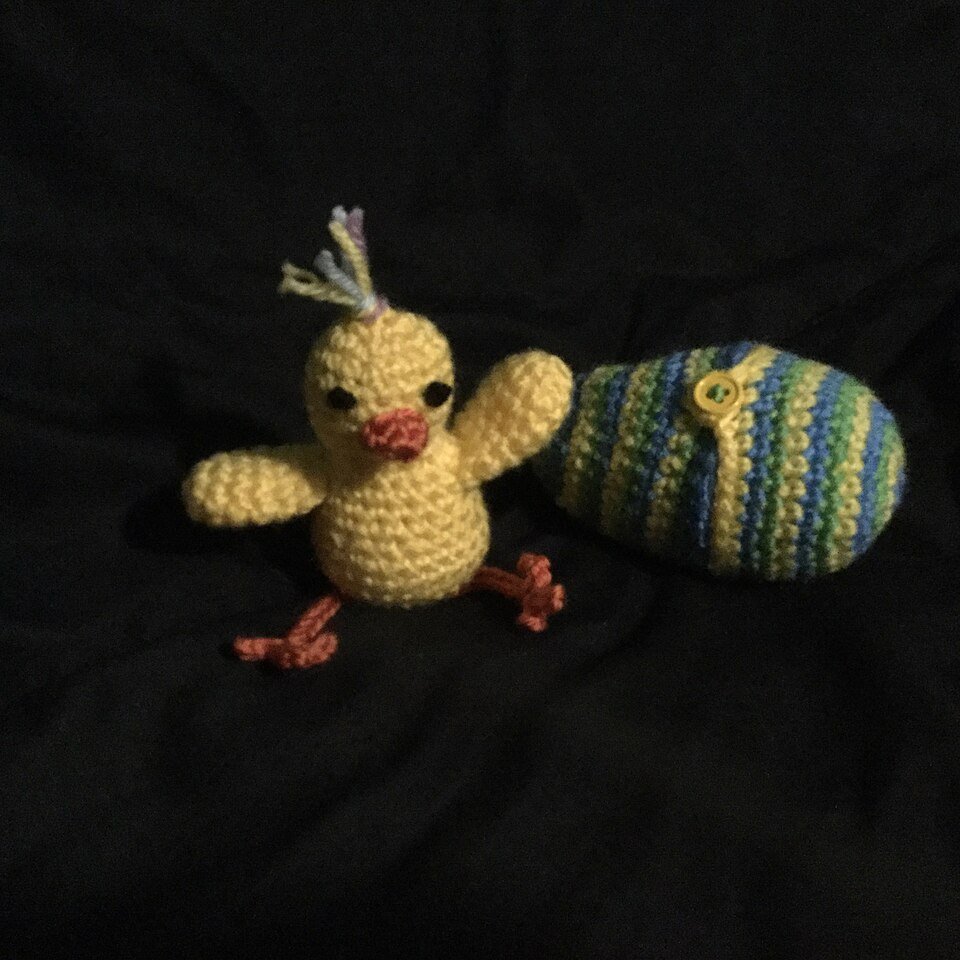
1. Mini amigurumi animals
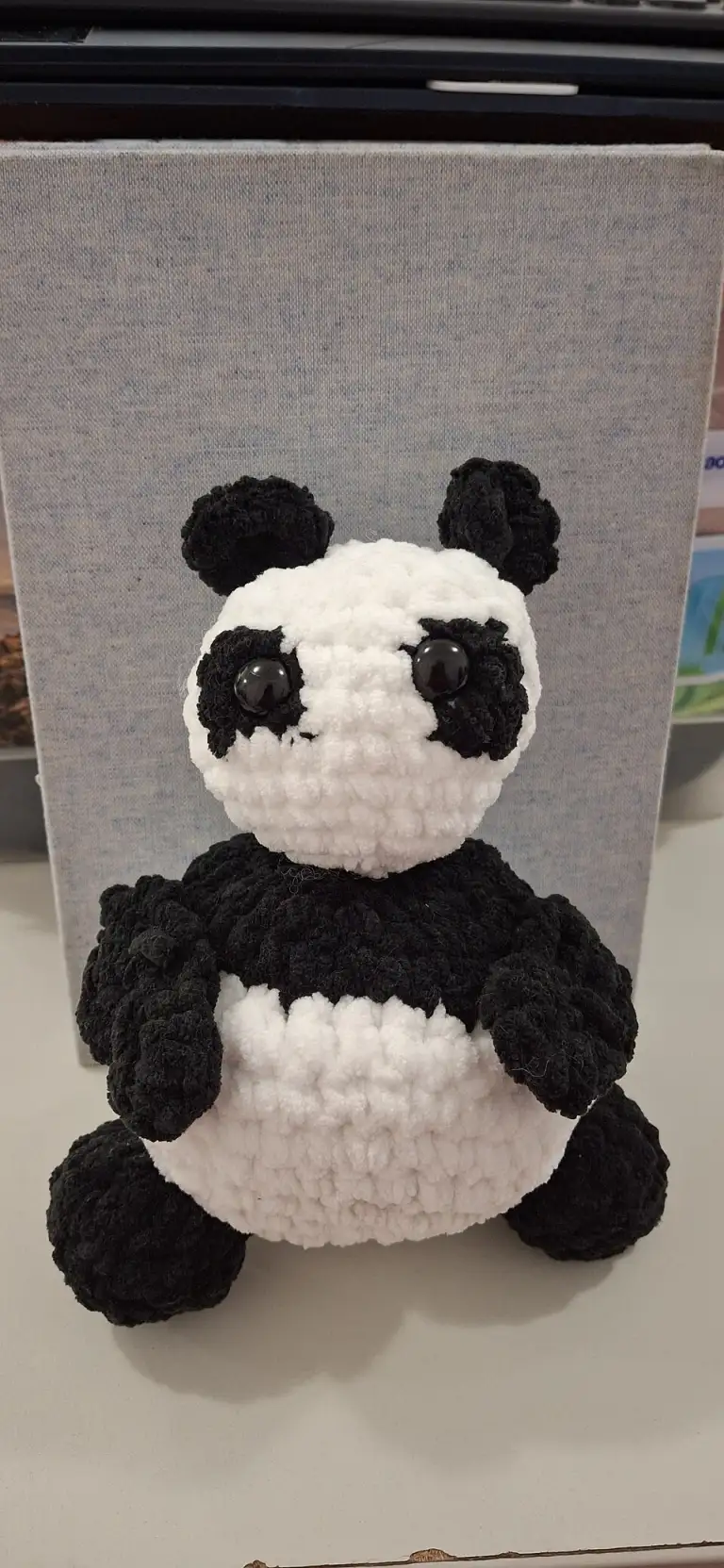
Amigurumi is the craft of crocheting small stuffed figures, usually worked in tight spiral rounds of double crochet (US single crochet). You can read a short history of the style on Wikipedia’s amigurumi page. A mini bear, cat or chick made in DK yarn on a 3 mm or 3.5 mm hook usually ends up around 8 to 10 cm tall.
If you would like ideas for shapes, our crochet animals guide covers simple bodies, heads and ears that you can scale down. Starting each piece with a magic ring gives a neat, closed centre with no hole for stuffing to escape.
2. A mini gonk
Gonks (also called gnomes) are simple cones with a beard and a nose, so they are quick to make and very forgiving. Make one in a smaller yarn or with fewer rounds and it becomes a perfect stocking-sized friend. Our crochet gonk pattern is a good starting point.
3. A tiny snowman or gingerbread man
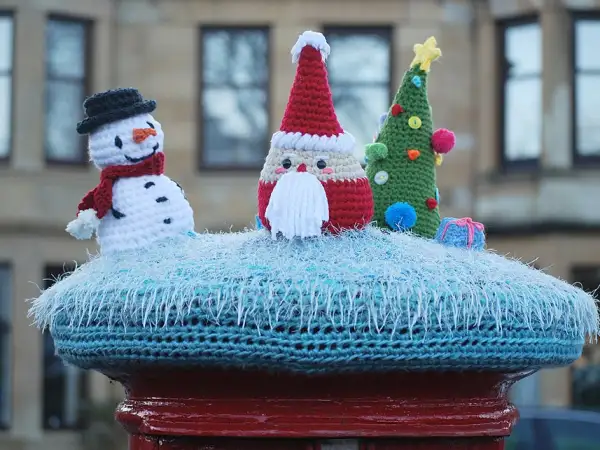
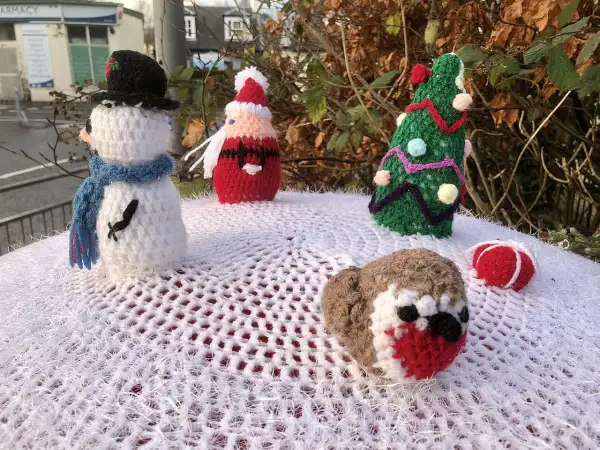
Festive characters are lovely because they can be a toy on Christmas morning and a tree decoration for years after. Try our crochet snowman or crochet gingerbread man, worked in a lighter yarn to keep them small.
4. Soft crochet balls
A small stuffed ball is one of the simplest toys you can make, and it is a nice first project for children who want to help. Make a set of these crochet stocking fillers in different colours for a catching game. The mini ball pattern further down works for this too.
Crochet stocking fillers for teens
Teenagers often prefer things they can wear or carry every day. Crochet stocking fillers in their favourite colours feel useful rather than babyish, and they are quick enough to make several in one weekend.

5. Hair scrunchies
A scrunchie is just a hair elastic covered in stitches with a ruffled round on top. It takes very little yarn and you can make a set of three in different colours in an evening. Cotton or cotton-blend yarn gives a smooth finish that is kind to hair. See the mini pattern below.
6. Ear warmers and headbands
An ear warmer is a band of stitches, usually 8 to 10 cm wide, joined at the back. Ribbed or textured stitches give it a bit of stretch. Headbands with a bow, like the one in the photo, are another quick idea that folds flat in a stocking.
7. Keyrings and bag charms
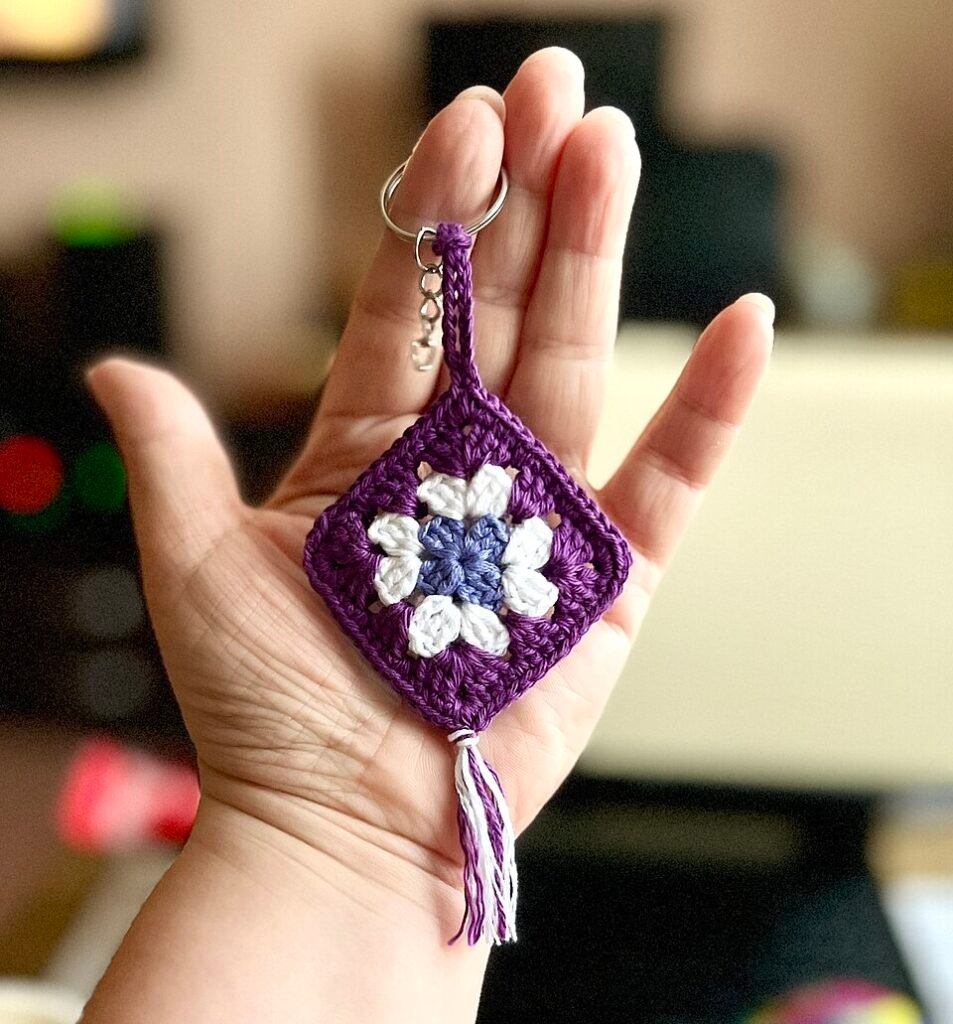
A single granny square, a small heart or a mini amigurumi on a keyring clip makes a cheerful gift for school bags and house keys. Use a split ring or lobster clasp from a craft shop and sew the yarn loop on firmly.
8. Lip balm cosies
A lip balm cosy is a tiny tube with a loop, so the balm can clip onto a bag or keys and never gets lost. It is one of the quickest crochet stocking fillers of all, and our mini pattern below shows you how.
Crochet stocking fillers for adults
For grown-ups, practical crochet stocking fillers tend to go down best. Think about the things people use daily and how a handmade version could make them a little cosier or prettier.
9. Hand warmers
Fingerless hand warmers are great for chilly offices, dog walks and holding a hot drink. They roll up small and fit easily in a stocking. Our crochet fingerless gloves pattern walks you through sizing and the thumb opening.
10. Bookmarks
A bookmark is a lovely gift for readers and a great way to use a fine cotton yarn. Keep it slim and flat so it does not damage the book. You will find several simple designs in our crochet bookmark guide.
11. Earbud or coin pouches
A small pouch made from two squares or a flat oval folded in half keeps earbuds, coins or a USB stick together. Add a button loop or a short zip if you are confident sewing one in.
12. Mug cosy
A strip of crochet wrapped around a mug with a button or tie keeps drinks warm a little longer and looks pretty on a desk. Measure around the recipient’s favourite mug if you can, or make it a little stretchy so it fits most mugs.
Crochet stocking fillers for the home
Crochet stocking fillers for the home suit families, couples and anyone who already has plenty of hats and scarves. They are also handy last-minute presents for neighbours and teachers.
13. Coasters
A set of two or four coasters ties up beautifully with a ribbon and lies flat at the bottom of a stocking. Cotton yarn is best because it handles warm mugs and washes well. Our crochet coasters pattern has round and square options.
14. Mini baubles
Small stuffed or covered baubles are ideal for hanging straight on the tree on Christmas morning. You can use the mini ball pattern below, or try the designs in our crochet bauble pattern.
15. Hanging motifs
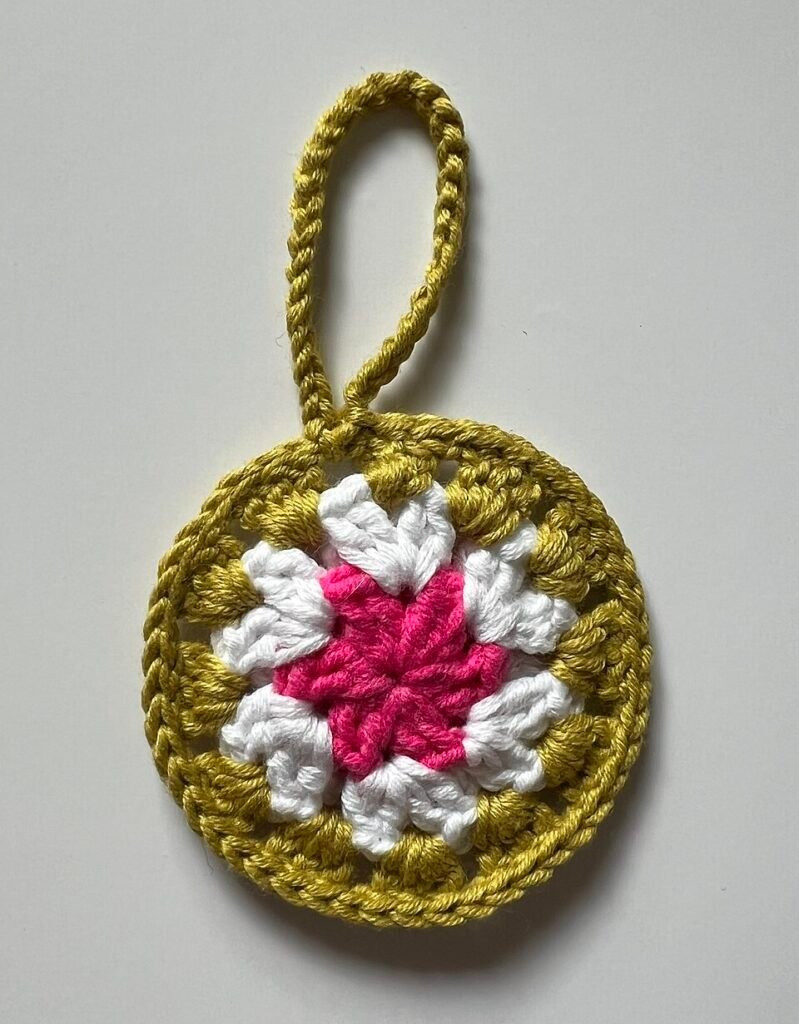
A single round motif, star, heart or granny square with a loop can hang on a tree, door handle or rear-view mirror. Flat motifs are among the quickest crochet stocking fillers and a good way to try a new stitch.
Three simple mini patterns for crochet stocking fillers
These three crochet stocking fillers are our own simple, generic designs. They are written in UK terms with US terms in brackets. Abbreviations: ch = chain, ss = slip stitch, dc = double crochet (US sc), tr = treble crochet (US dc), dc2tog = double crochet two together (US sc2tog), st(s) = stitch(es).
All three are worked in DK yarn. Use a 3 mm or 3.5 mm hook for the toys and cosy so the fabric is tight, and a 4 mm hook for the scrunchie.
Mini ball or bauble (about 4 to 5 cm across)
Work in continuous spiral rounds without joining. Place a stitch marker in the first stitch of each round and move it up as you go.
- Round 1: make a magic ring, 6 dc into the ring, pull tight (6 sts).
- Round 2: 2 dc in each st around (12 sts).
- Round 3: *1 dc in next st, 2 dc in next st; repeat from * 6 times (18 sts).
- Rounds 4 to 6: 1 dc in each st around (18 sts).
- Round 7: *1 dc in next st, dc2tog; repeat from * 6 times (12 sts).
- Stuff firmly with toy stuffing.
- Round 8: dc2tog 6 times (6 sts).
- Fasten off, leaving a long tail. Thread the tail through the front loops of the last 6 sts, pull tight to close and weave in securely.
For a bauble, use the tail to make a hanging loop of about 8 cm before you weave in. For a toy for a young child, leave off any loop and sew the end in very firmly.
Lip balm cosy
Make this in DK cotton on a 3 mm hook. Most standard lip balm sticks fit snugly, but try it on as you go and add or remove a round to suit.
- Round 1: make a magic ring, 6 dc into the ring, pull tight (6 sts).
- Round 2: 2 dc in each st around (12 sts).
- Round 3: working into the back loop only, 1 dc in each st around (12 sts). This makes a flat base.
- Rounds 4 to 12: 1 dc in each st around (12 sts), or until the tube is about 1 cm shorter than the lip balm so the cap is easy to grip.
- Ss into the next st. For the loop, ch 20, then ss into the same st to form a loop. Fasten off and weave in the ends.
Thread a keyring clip onto the chain loop before you join it if you would like it to clip onto keys or a bag.
Ruffle scrunchie
You will need one standard fabric-covered hair elastic and a 4 mm hook.
- Round 1: join yarn to the elastic with a ss. Work dc (US sc) over the elastic, pushing the sts together as you go, until the elastic is fully covered all the way round. Ss to the first dc to join.
- Round 2: ch 3 (counts as first tr), 2 tr in the same st, then 3 tr (US dc) in each st around. Ss to the top of the ch-3 to join.
- Fasten off and weave in the ends well.
The ruffle will twist and gather naturally. For a fuller ruffle, work a third round of 1 dc in each st. For a lighter one, work 2 tr instead of 3 in each st on Round 2.
Time and yarn guide for crochet stocking fillers
These timings for crochet stocking fillers are rough guides for a confident beginner using DK yarn. Your times will vary with experience, hook size and how many details you add.
| Item | Approx. finished size | Yarn (DK) | Rough time |
|---|---|---|---|
| Mini ball or bauble | 4 to 5 cm across | A few metres | 20 to 30 minutes |
| Lip balm cosy | About 6 cm tall | A few metres | 20 to 30 minutes |
| Ruffle scrunchie | 8 to 10 cm across | About a quarter of a 50 g ball | 30 to 45 minutes |
| Keyring or hanging motif | 5 to 7 cm | Scraps | 15 to 30 minutes |
| Bookmark | 15 to 20 cm long | Scraps of fine cotton | 30 to 60 minutes |
| Coaster (each) | 9 to 11 cm across | Scraps to a quarter ball of cotton | 20 to 40 minutes |
| Mini amigurumi animal | 8 to 10 cm tall | Up to half a 50 g ball plus scraps | 2 to 4 hours |
| Ear warmer | 8 to 10 cm wide | About one 50 g ball | 2 to 3 hours |
| Hand warmers (pair) | Adult size | One to two 50 g balls | 3 to 5 hours |
If you are short on time, the first four rows are your friends. You will find even more speedy ideas in our last minute crochet Christmas gifts guide.
Toy safety for crochet stocking fillers for small children
Handmade toys are wonderful, but babies and toddlers put everything in their mouths. If any of your crochet stocking fillers are going to a child under 3, take extra care.
- No small loose parts for under-3s. Avoid buttons, beads, sequins, bells, pompoms that could pull off, and any small pieces that could become a choking hazard.
- Use embroidered eyes for young children. Stitch eyes and noses with yarn or embroidery thread instead of using safety eyes. For older children, if you do use safety eyes, fit them securely with their locking backs before closing the piece, and check they cannot be pulled out.
- Sew pieces on firmly. Attach arms, ears and tails with several passes of yarn right through the body, and weave ends in well so nothing works loose.
- Keep stitches tight. Use a smaller hook than the yarn label suggests so stuffing cannot poke through the gaps.
- Skip long loops and cords. Leave hanging loops off toys meant for babies and toddlers.
- Accessories are not toys. Keyrings, scrunchies, lip balm cosies and baubles with loops are for older children and adults, not little ones.
Check handmade crochet stocking fillers regularly for wear, and if you plan to sell toys rather than give them as gifts, look up the current official UK guidance on toy safety before you do.
Tips for wrapping and finishing crochet stocking fillers
A little finishing goes a long way with crochet stocking fillers. Weave in every end neatly, give flat pieces such as coasters and bookmarks a gentle steam or wet block so they lie flat, and trim any fuzzy bits.
For wrapping, tissue paper or a small fabric bag works well and saves on tape. A tiny handwritten tag with the yarn type and care instructions (for example “hand wash, dry flat”) is a thoughtful touch. If you are making several pieces for one person, a small drawstring bag is a lovely extra.
Looking for more festive projects? Browse our crochet Christmas tree ornaments for more small, quick makes.
Frequently asked questions about crochet stocking fillers
What are the quickest crochet stocking fillers to make?
Lip balm cosies, mini balls, keyrings, hanging motifs and scrunchies are the fastest crochet stocking fillers. Most take under an hour, and many take around 20 to 30 minutes once you know the pattern.
What yarn is best for small crochet gifts?
DK yarn is a good all-rounder. Choose cotton for coasters, scrunchies and lip balm cosies, and a soft acrylic or wool blend for toys, ear warmers and hand warmers. Leftover yarn from other projects is perfect for crochet stocking fillers.
How big should a stocking filler be?
Aim for items that fit in the palm of an adult hand, roughly 6 to 12 cm for toys. Flat or squashy items, such as bookmarks, coasters and hand warmers, can be a little larger because they fold or slide down the side.
Are crochet toys safe for babies?
They can be if you make them with care. For children under 3, avoid small loose parts, use embroidered eyes instead of safety eyes, sew all pieces on very firmly, keep stitches tight and leave off loops and cords.
Can beginners make these patterns?
Yes. The three mini patterns in this guide only use chains, slip stitch, double crochet (US single crochet), treble crochet (US double crochet) and simple increases and decreases, so they are ideal first projects.