A crochet cushion cover is one of the quickest ways to make a room feel cosy. It is just two flat squares joined around the edges, so it is a perfect first home project, and you can finish one in a weekend.
This guide gives you three free crochet cushion patterns in UK terms: an easy half treble cover with a size chart for every common pad, a classic granny square cushion, and a removable cover with a button back. You will also find yarn amounts, joining methods and tips for a plump, neat finish on your crochet pillow.
Quick answer: To crochet a cushion cover, make two squares about 2cm smaller than your cushion pad, place them wrong sides together and join them with double crochet through both layers on three sides. Insert the pad and close the last side. A 40cm cover in aran yarn uses about 300g and takes 6 to 8 hours.
What you need for a crochet cushion cover
| Item | What to use |
|---|---|
| Yarn | Aran (worsted) for the half treble cover; DK for the granny square cover |
| Hook | 6mm (UK 4, US J-10) for aran, 4mm (UK 8, US G-6) for DK |
| Cushion pad | Any square pad: 30cm, 40cm, 45cm or 50cm |
| Extras | Tapestry needle, stitch markers, 3 buttons (for the button-back cover) |
Acrylic or a wool blend is the most practical yarn for cushions because it washes well and stays soft. Cotton gives crisp stitches but feels heavier. See our crochet yarn guide for more help choosing.
Abbreviations (UK terms)
- ch chain
- ss slip stitch
- dc double crochet (US single crochet)
- htr half treble (US half double crochet)
- tr treble (US double crochet)
- sp space
Crochet cushion cover size chart
Make the cover about 2cm smaller than the pad. Crochet stretches, so a slightly smaller cover hugs the pad and looks full and plump instead of baggy.
| Pad size | Each panel | Stitches (htr) | Rows (htr) | Aran yarn, approx. |
|---|---|---|---|---|
| 30 x 30cm | 28 x 28cm | 36 | 28 | 170g |
| 40 x 40cm | 38 x 38cm | 49 | 38 | 300g |
| 45 x 45cm | 43 x 43cm | 56 | 43 | 380g |
| 50 x 50cm | 48 x 48cm | 62 | 48 | 470g |
Stitch and row counts are based on a tension of 13 htr and 10 rows to 10cm with a 6mm hook. Yarn amounts are estimates for two panels plus the joining round.
Pattern 1: easy half treble crochet cushion cover
This is the simplest crochet cushion cover pattern: two identical squares in half treble crochet.
Panels (make 2)
Foundation: chain the number of stitches for your size plus 2 (for example 51 ch for a 40cm pad).
Row 1: 1 htr in the 3rd ch from the hook and in every ch to the end, turn.
Row 2 onwards: 2 ch (does not count as a stitch), 1 htr in every stitch to the end, turn.
Repeat Row 2 until the panel is square, using the row count in the chart as a guide. Fasten off on the first panel and keep the yarn attached on the second.
Joining the cushion
- Place the panels wrong sides together, with the panel that still has the yarn attached at the back.
- Work dc through both layers along three sides, working 3 dc into each corner.
- Slip the cushion pad inside.
- Continue in dc along the fourth side, ss to the first dc and fasten off.
For a decorative edge, work one more round of crab stitch (dc worked from left to right) or a simple picot: [3 dc, 3 ch, ss into the 3rd ch from the hook] around.

Pattern 2: granny square crochet cushion
A granny square cushion uses up leftover yarn and looks lovely in bright stripes or soft neutrals. Each side is one big granny square worked in rounds.
- Follow the rounds in our crochet granny square tutorial, using DK yarn and a 4mm hook.
- Keep adding rounds until the square measures 2cm less than your pad. In DK this is roughly 17 to 18 rounds for a 40cm pad, but always measure.
- Make a second square the same size. You can make the back in one colour to save time.
- Join the squares wrong sides together with dc through both layers, as in Pattern 1, and insert the pad before closing the last side.
Allow about 200 to 250g of DK for a 40cm granny square cushion. Change colour every one or two rounds and finish with a round of the darkest colour to frame the cushion.
Pattern 3: removable crochet cushion cover with buttons
If you want to wash the cover often, make an envelope back that buttons closed.
- Front: make one full panel as in Pattern 1.
- Lower back: work the same number of stitches as the front, for about two thirds of the height.
- Upper back: work the same number of stitches for about half the height. On the last two rows, work in dc instead of htr, making 3 buttonholes on the final row: [dc to the buttonhole position, 2 ch, skip 2 sts], spacing them evenly.
- Making up: place the lower back on the front, then the upper back on top so it overlaps the lower back by about 10cm. Join all around with dc, then sew the buttons onto the lower back to line up with the buttonholes.

Crochet cushion ideas and variations
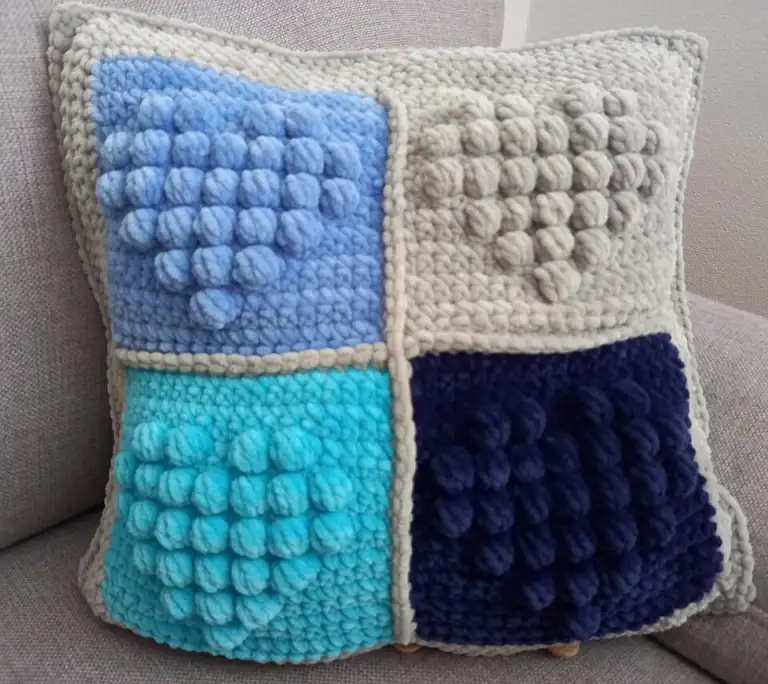
- Bobble hearts: work bobble stitches in a heart shape on four smaller squares, as in the photo at the top. Our bobble stitch crochet guide shows the stitch.
- Textured cushion: swap htr for moss stitch from our moss stitch crochet blanket pattern.
- Stripes: change colour every 4 rows on the front and keep the back plain.
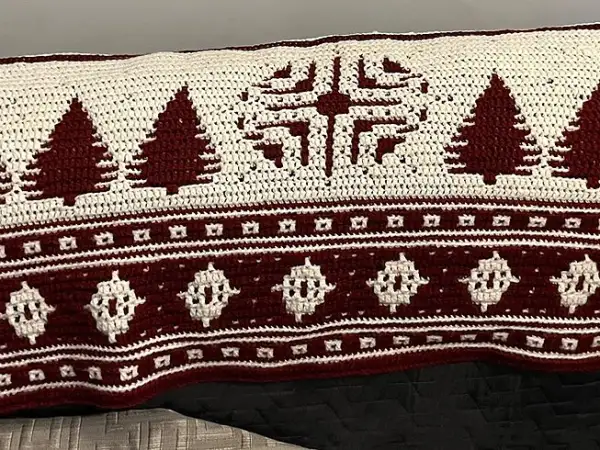
- Christmas cushion: use red, green and cream, or stitch a few motifs from our crochet Christmas ornaments onto a plain front.
- Floor cushion: use super chunky yarn and a 10mm hook for a 60cm pad.
- Matching set: make a cushion to go with a crochet blanket in the same colours.
Common crochet cushion problems and fixes
The cover is baggy
The cover is too big for the pad. Use a pad one size larger, or make the next cover 2 to 3cm smaller than the pad.
The pad shows through the stitches
Your tension is loose. Use a smaller hook, a thicker yarn, or put the pad in a plain cotton cover in a matching colour first.
The panels are not square
Count the stitches on every row and remember the 2 ch at the start of a row does not count. Blocking both panels to the same size before joining also helps.
The corners look rounded
Work 3 dc into every corner when you join the panels, and push the corners of the pad right into the cover.

Tips for a neat crochet pillow
- Use a feather or hollowfibre pad that is generously filled; flat pads make any cover look tired.
- Join the panels in a contrast colour for a neat frame, or in the same colour for a seamless look.
- Weave in ends on the inside of each panel before joining, so nothing pokes out later.
- Wash crochet cushion covers inside a pillowcase on a gentle wool cycle and dry them flat.
Ready to make your crochet cushion cover?
Pick your pad size from the chart, choose one of the three patterns and start with the front panel. A 40cm half treble cushion takes most people about 6 to 8 hours, so you could have a brand new crochet cushion on the sofa by Sunday evening.
For a striking cushion front, try our beginner mosaic crochet pattern.
Frequently asked questions about crochet cushion covers
How much yarn do I need for a crochet cushion cover?
About 300g of aran yarn for a 40cm cushion in half treble crochet, or about 200 to 250g of DK for a 40cm granny square cushion.
What size should a crochet cushion cover be?
Make it about 2cm smaller than the cushion pad. Crochet stretches, so a slightly smaller cover gives a full, plump cushion.
How long does it take to crochet a cushion cover?
A 40cm cushion cover takes about 6 to 8 hours in half treble crochet with aran yarn.
Can I wash a crochet cushion cover?
Yes. Make the removable button-back version, then wash it inside a pillowcase on a gentle cycle and dry it flat.
Is this crochet cushion pattern in UK or US terms?
It is written in UK terms. In US terms, htr is half double crochet (hdc), dc is single crochet (sc) and tr is double crochet (dc).